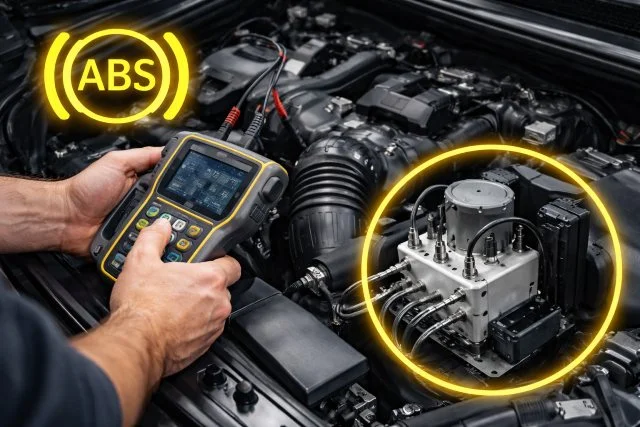
ABS Testauslösung is an essential process in modern vehicle safety systems, ensuring that your Anti-lock Braking System (ABS) activates correctly when needed. When driving, especially during emergency situations, ABS helps to maintain control by preventing wheel lock. It operates by adjusting brake pressure to avoid skidding, maintaining both steering control and vehicle stability. If ABS doesn’t trigger properly, it can lead to unsafe driving conditions, making it critical to check ABS Testauslösung during regular vehicle maintenance.
The technology behind ABS Testauslösung is based on wheel speed sensors that monitor the speed of each wheel. When one wheel starts to lock up during hard braking, the ABS control unit quickly reduces and reapplies brake pressure to that wheel. This cycle of pressure reduction and reapplication helps prevent skidding, ensuring that you maintain vehicle control. The hydraulic modulator and brake lines ensure the system’s smooth operation under various road conditions, including wet, icy, or uneven surfaces.
ABS Testauslösung is not just a technical procedure but a safety feature that impacts every driver. When it fails, the car’s braking system becomes less effective, and brake failure becomes a serious risk. The key to preventing this is regular ABS diagnostics, which checks everything from sensor alignment to the ABS control unit’s response. A timely diagnosis ensures that ABS works as intended and can save lives in an emergency situation.
The Importance of ABS Testauslösung in Different Driving Conditions
When driving on slippery roads or during high-speed braking, ABS Testauslösung is automatically triggered to prevent wheel lock. In wet roads, icy conditions, or gravel roads, ABS comes into play, preventing skidding and ensuring vehicle stability. During sudden stops, ABS pulses the brake pedal to give the driver feedback, allowing them to maintain control of the vehicle. It helps drivers steer and stop with minimal loss of control, especially in critical situations like panic braking.
The complexity of modern braking systems requires that ABS Testauslösung is tested regularly. Vehicle inspections will check the ABS system’s functionality, including the warning light and response time. When ABS Testauslösung fails, it may show signs such as a persistent ABS warning light or the absence of pedal vibration during hard braking. This indicates that there’s an issue with the system that could jeopardize your safety on the road.
It’s crucial to remember that ABS Testauslösung plays a central role not only during emergency braking but also in everyday situations. For example, during high-speed braking on wet or icy roads, ABS will help reduce stopping distances and ensure that the vehicle doesn’t lose traction. Properly functioning ABS Testauslösung will prevent wheel locking, maintaining stability, and improving overall safety.
| Driving Condition | Explanation | Benefits of ABS Testauslösung |
|---|---|---|
| Wet Roads | When driving on wet roads, the traction between tires and road decreases, leading to skidding. | ABS Testauslösung helps prevent wheel lock, maintaining steering control and reducing stopping distances. |
| Icy Conditions | Ice causes slippery roads, making it difficult to maintain control during braking. | ABS activation ensures brake pressure modulation, allowing better vehicle stability on slippery surfaces. |
| Gravel Roads | Loose gravel reduces traction, and the vehicle may slide or lose control during braking. | ABS Testauslösung maintains control, preventing skidding and improving overall braking performance. |
| Emergency Braking | Sudden stops or panic braking can lead to wheel lock, especially at high speeds. | ABS reduces the risk of wheel lock, ensuring that the driver can steer the vehicle even under stressful conditions. |
| High-Speed Braking | Braking at high speeds requires precise control to avoid loss of control or skidding. | ABS Testauslösung maintains vehicle stability and steering control, reducing the chance of accidents. |
How ABS Testauslösung Works with Advanced Safety Systems
In modern vehicles, ABS Testauslösung is integrated with advanced safety technologies like Electronic Stability Control (ESC) and Traction Control Systems (TCS). These systems work together to prevent skidding and loss of control by adjusting the brake pressure across the wheels. When ABS Testauslösung is triggered, it interacts with these systems to provide the optimal braking experience, even on challenging surfaces.
The latest electric and hybrid vehicles are designed with more complex systems, including regenerative braking. In these cases, ABS Testauslösung must coordinate between the traditional braking system and the regenerative systems to ensure seamless operation during emergency stops. This adds a layer of complexity but ensures that the ABS system remains just as reliable and efficient in these vehicles.
Maintaining ABS Testauslösung for Optimal Safety
To ensure that ABS Testauslösung functions correctly, regular vehicle maintenance is crucial. This includes checking wheel speed sensors, inspecting brake fluid levels, and cleaning any dirt or debris that may interfere with the sensor’s readings. Even minor issues like dirty wheel speed sensors can cause the ABS system to fail, compromising safety. Regular inspections will help detect early signs of wear or malfunction, ensuring that you can rely on your ABS system in case of an emergency.
You should also ensure that brake components are in good condition and replace any worn-out parts promptly. ABS Testauslösung depends on the precise functioning of every component, from the hydraulic modulator to the ABS control unit. Any failure in the braking system can cause ABS activation issues, leading to unsafe braking behavior and, in the worst cases, vehicle accidents.
| Maintenance Task | Explanation | Benefits of Regular Maintenance |
| Replace Brake Fluid | Brake fluid is essential for proper ABS operation. Over time, it can degrade or become contaminated. | Regular replacement ensures smooth operation of the ABS system and prevents hydraulic failure. |
| Clean Wheel Speed Sensors | Wheel speed sensors can become dirty or blocked by debris, affecting their performance. | Cleaning the sensors ensures accurate readings, enabling proper ABS activation during braking. |
| Check Hydraulic Modulator | The hydraulic modulator adjusts brake pressure. If malfunctioning, it can prevent proper ABS modulation. | Regular checks can prevent brake pressure issues, ensuring the ABS system works effectively. |
| Fix Warning Lights Immediately | ABS warning lights indicate potential issues with the system. Ignoring them can lead to failure. | Timely repairs prevent ABS malfunctions, ensuring the system remains fully functional when needed. |
| Use Quality Brake Components | High-quality brake components are necessary for effective ABS Testauslösung and braking efficiency. | Quality parts reduce wear and tear, ensuring optimal braking performance and ABS activation. |
Understanding the Difference Between ABS Testauslösung and Normal Braking
It’s important for drivers to understand how ABS Testauslösung differs from regular braking. During normal braking, a driver can apply steady pressure on the brake pedal, but under emergency conditions, ABS Testauslösung kicks in, causing a pulsating feel in the brake pedal. This is a sign that the ABS system is working to prevent wheel lock and maintain steering control.
In contrast, regular braking doesn’t offer the same level of control. ABS Testauslösung ensures that the vehicle’s wheels don’t lock, allowing the driver to continue steering and avoid skidding. In high-speed braking, ABS Testauslösung helps keep the car’s stability intact, especially when driving conditions are less than ideal. This makes ABS Testauslösung a critical safety feature in modern vehicles.
Conclusion
In summary, ABS Testauslösung is an indispensable feature of modern vehicle safety systems. Whether during an emergency stop or regular driving, the ABS system plays a critical role in ensuring vehicle stability and steering control. It prevents wheel lock, maintains traction, and helps the driver maintain control during high-speed braking. By regularly checking and maintaining ABS Testauslösung, vehicle owners can ensure their braking system operates effectively, preventing accidents and improving overall road safety.
About the Author