Introduction
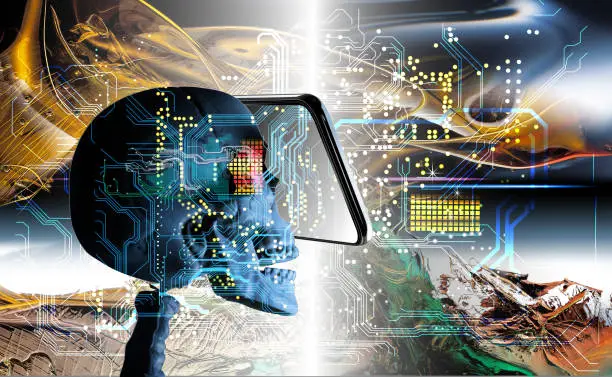
The smartphone has long been at the center of the digital world, but now, the landscape is evolving. As tech giants envision future beyond smartphones, they are focusing on groundbreaking technologies that will shift how we interact with devices. The goal is to move beyond handheld screens to immersive, context-aware systems. With augmented reality (AR), artificial intelligence (AI), and brain-computer interfaces (BCI), the future promises to offer seamless experiences that integrate technology into our daily lives without the need for traditional devices.
Key Drivers of the Shift
As smartphone markets mature and growth slows, tech giants are investing in alternatives. The post-smartphone era will be driven by new technologies such as wearables, ambient AI, and AR glasses. These innovations are being designed to make our interactions with devices more hands-free, personalized, and privacy-conscious. Consumers are looking for solutions that offer privacy and greater control, and companies like Meta, Google, and Apple are working hard to meet these needs. The $3 trillion market for these post-smartphone technologies is expected to be realized by 2030, making it a key area for R&D and innovation.
The Evolution of Tech Giants’ Strategies
What makes the future beyond smartphones so exciting is the opportunity for immersive technologies to offer more than just entertainment or communication. As tech giants envision future beyond smartphones, their focus is on creating intelligent systems that can anticipate needs without explicit commands. Devices powered by AI and AR will not only be more interactive but also context-aware, meaning they can respond to the environment in real-time. The integration of BCIs will allow us to control devices with our thoughts, offering cognitive augmentation that could revolutionize everything from healthcare to work productivity.
Major Players and Their Strategies
The shift to post-smartphone technology involves several key players, each with unique strategies. Meta, for example, has invested $50 billion into Reality Labs, which focuses on developing AR glasses and holographic displays. Their goal is to create an immersive environment where users can interact with the digital world without relying on a phone. Similarly, Apple is heavily invested in spatial computing and AR glasses, aiming to integrate these technologies seamlessly across its ecosystem of devices. As tech giants envision future beyond smartphones, these investments are set to shape a world where devices are more natural extensions of ourselves, with AI assistants and smart wearables managing our daily tasks.
| Tech Giant | Key Technologies | Focus Areas | Expected Adoption Timeline | Notes |
| Meta | AR Glasses, Immersive AI | Consumer wearables, Social AR experiences | 2025–2030 (early adopters), 2030–2035 (mainstream) | $50 billion invested in Reality Labs, aiming for immersive AR |
| Neuralink | Brain-Computer Interfaces (BCI) | Thought-based interaction, Cognitive augmentation | 2025–2030 (clinical trials), 2030–2035 (wider adoption) | N1 implant for thought-controlled computing, expected to grow to $24.7 billion |
| OpenAI | Ambient AI, Robotics | Context-aware AI systems, Predictive ambient intelligence | 2025–2030 (enterprise pilots), 2030–2035 (consumer integration) | Focus on ambient AI and collaborative robotics |
| AR, AI, Spatial Computing | AR navigation, Real-time translation, AI integration | 2025–2030 (developer/early users), 2030–2035 (broad adoption) | Android XR, Astra project, edge AI infrastructure | |
| Apple | Spatial Computing, AR Glasses | Seamless ecosystem, Consumer wearables | 2025–2030 (early adopters), 2030–2035 (mainstream) | $8.3 billion invested in AR glasses, Vision Pro headset |
Another notable player in this space is Neuralink, which is developing brain-computer interfaces (BCI) that will allow users to interact with their devices through thought alone. These BCIs could provide cognitive augmentation, making it possible for people with disabilities to control devices or regain lost functions. While these technologies are still in their early stages, Neuralink’s potential for transforming human capabilities is huge. The market for BCIs is projected to grow dramatically, from $2.3 billion in 2024 to $24.7 billion by 2030. This kind of technological advancement will pave the way for more intelligent, personalized, and hands-free experiences.
Breakthrough Technologies Powering the Transition
The shift to a post-smartphone world involves the development of several breakthrough technologies. AR glasses, AI, and BCI are at the forefront of these innovations, enabling users to interact with their surroundings in new and exciting ways. Companies are investing heavily in wearables, including AI-powered devices that offer more than just convenience—they provide ambient intelligence, allowing devices to anticipate user needs. These technologies will revolutionize how we engage with the world, providing an experience that’s far more immersive and intuitive than anything smartphones can offer.
Challenges and Barriers
As with any new technology, there are challenges to overcome. Privacy concerns, user acceptance, and battery life are just a few of the obstacles that could slow down the adoption of post-smartphone technologies. Many people are still wary of smart devices that continuously collect data, and there is also concern about the potential for social friction with wearable tech like AR glasses. However, as the technology matures and companies work to address these concerns, we will likely see wider acceptance and integration into everyday life.
| Challenge | Description | Solution |
| Privacy and Ethics | Continuous monitoring raises concerns about data privacy and ethical governance | Transparent governance and security protocols |
| User Acceptance | Wearable tech like AR glasses may cause discomfort or social friction | Focus on ergonomic design and aesthetic appeal |
| Cost and Accessibility | High device costs could limit adoption of BCI and AI technologies | Develop affordable solutions and improve battery life |
| Technological Limitations | Battery life, weight, and processing power remain key challenges for post-smartphone tech | Innovate with next-gen batteries, miniaturization of components |
| Cybersecurity | The integration of AI and BCI creates new cybersecurity risks | Strengthen security measures and ensure data protection |
Consumer Implications
The shift to post-smartphone technology will have significant implications for consumers. Immersive experiences, such as those offered by AR glasses and AI assistants, will allow for more personalized and hands-free interactions. This will lead to a more seamless experience, where devices anticipate user needs and adapt to their habits. With ambient computing and AI-powered wearables, consumers will be able to accomplish more with less effort, leading to increased productivity and a more efficient digital experience.
Market Outlook
The post-smartphone market is projected to become a $3 trillion industry by 2030, driven by the widespread adoption of AR glasses, AI assistants, and BCIs. Initially, AR glasses and AI-driven devices are expected to be adopted between 2025 and 2030, with mainstream use becoming common between 2030 and 2035. As tech giants envision future beyond smartphones, these devices will transform how we engage with the digital world, making them more intuitive and integrated into our daily lives.
FAQs
Q1: What does the post-smartphone era mean for daily life?
The post-smartphone era will shift away from handheld devices, introducing immersive experiences through AR glasses, AI assistants, and BCIs. These technologies will create hands-free, context-aware interactions, providing more personalized experiences.
Q2: What companies are leading the post-smartphone revolution?
Meta, Apple, Google, OpenAI, Neuralink, and Microsoft are the major players, each investing in AR, AI, BCI, and spatial computing to replace or augment smartphones.
Q3: What technologies are replacing traditional smartphones?
AR glasses, BCIs, ambient AI, and spatial computing are the key technologies set to replace smartphones. These technologies offer more hands-free, immersive experiences with AI-powered devices.
Q4: What obstacles could slow down post-smartphone adoption?
Privacy concerns, user acceptance, battery life, and cost are the primary barriers. Social friction with wearables and concerns about data privacy could slow adoption, but solutions are being developed to address these issues.
Q5: How will consumers benefit from post-smartphone technology?
Consumers will benefit from hands-free, personalized experiences, with AI assistants and AR glasses offering seamless interactions. Ambient computing will provide more efficient, context-aware systems, increasing productivity and convenience.
Q6: When will post-smartphone technology become mainstream?
Adoption is expected to begin between 2025 and 2030, with mainstream adoption by 2030-2035, as AR glasses, AI assistants, and BCIs become more affordable and integrated into everyday life.
About the Author